Spotting Locus In addition to banding on the hair and color of pigment, white spotting is also present in Malamutes. There is often a lot of misunderstanding about what white spotting does and does not do. White spotting does NOT give us the white under-parts that are a trademark of Malamute color. That is instead caused by the Agouti and Domino loci, with some help from the Chinchilla-like locus.
White spotting gives us white areas in addition to the typically seen lighter under-parts. These can be difficult to find because they usually are in the same areas where Malamutes are already white (so we
don’t see them) or are in areas joining those already white (so folks don’t realize they are being caused by something different).
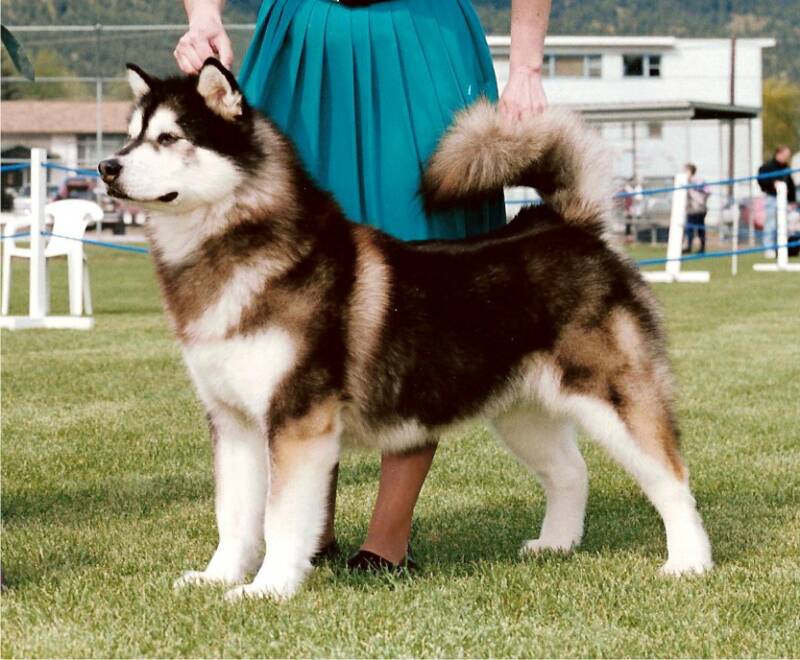
S - Solid Some Malamutes are homozygous “SS”, or solid colored. While they are referred to as "solid colored" these dogs actually can have very minor white spotting limited to their toes, chest, and tail tip. It is not
unusual for these dogs to have colored hairs running down the backs of their hocks, color bands that are unbroken or almost unbroken on their chest, and no white tail tip.
Si - Irish Spotting
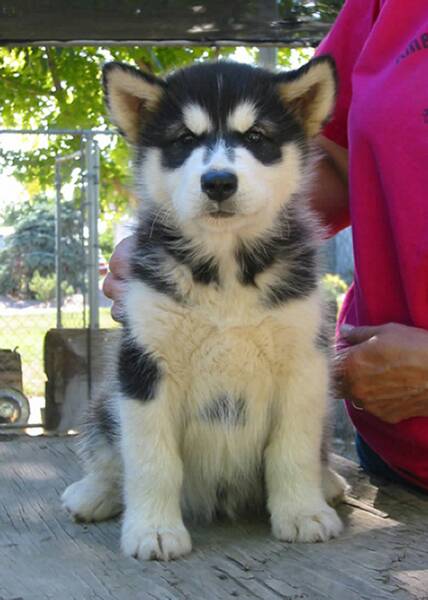
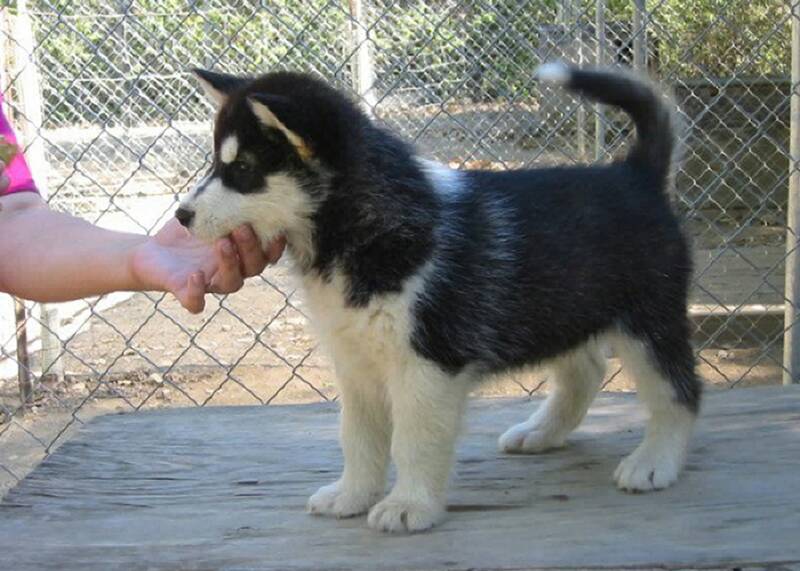
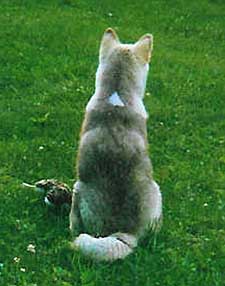
Malamutes who have larger amounts of white spotting are often Irish Spotted “sisi”. Irish Spotting confines white spotting to the legs, end of the tail, chest, underbody, face, and neck. The white spotting does not cross the dogs back between their neck and tail. In Malamutes we have come up with a variety of names for the different places and ways Irish Spotting can express itself. Blazes, stars, split bars, eagle markings on the chest, white collars, nape or wither spots, and white tail tips are all caused by Irish Spotting.
Like the Agouti locus, incomplete dominance is often seen in white spotting. Dogs who are heterozygous “Ssi” frequently have more white than “SS” dogs, but less than “sisi” dogs.
Sp - Piebald
While not common in Malamutes, Piebald historically existed in the base population from which malamutes came and occurs in Inuit Sled Dogs and Siberian Huskies. It does turn up very infrequently in Malamutes, so infrequently that it has taken me several years to find proof.
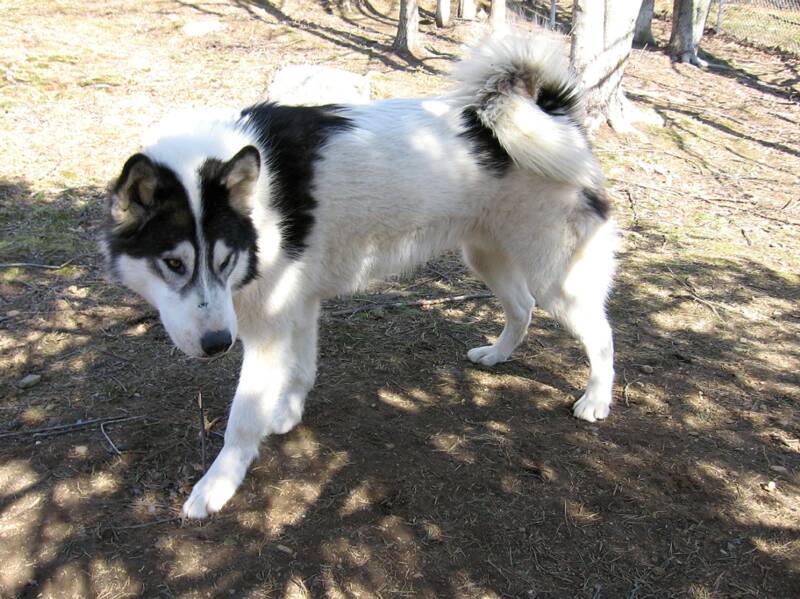
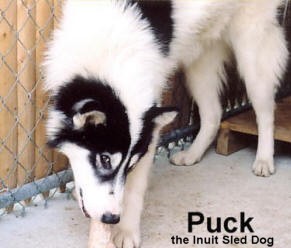
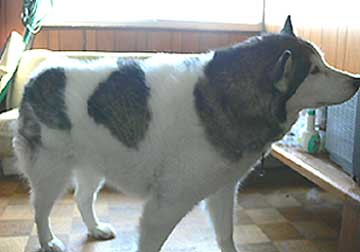
Piebald causes white patches along the sides of the dog, running upward from belly towards the back. This produces the broken color or uneven splashing that is listed as undesirable in the standard. Thus this characteristic has been heavily selected against in the breed.
Not a Malamute, however this Inuit Sled Dog is a classic Piebald
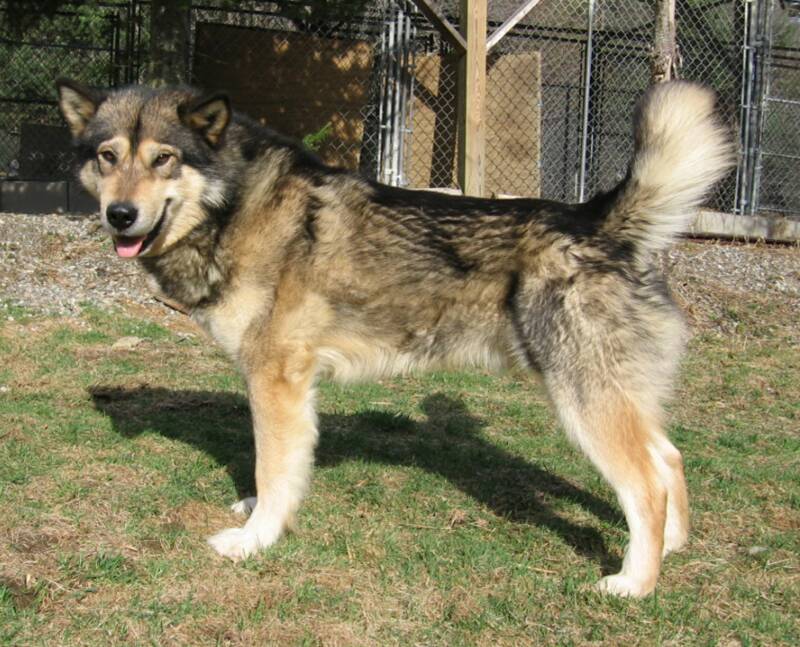
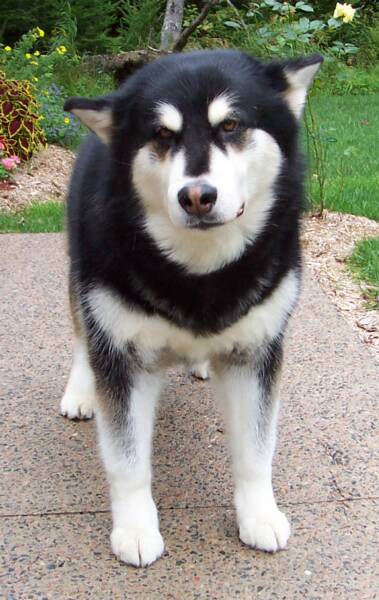
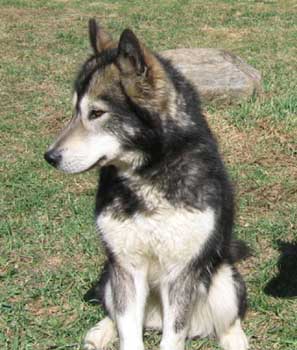
These Malamutes are all solid colored. They have unbroken color on their chests, color extending down their legs, and little or no white on the tip of their tail.
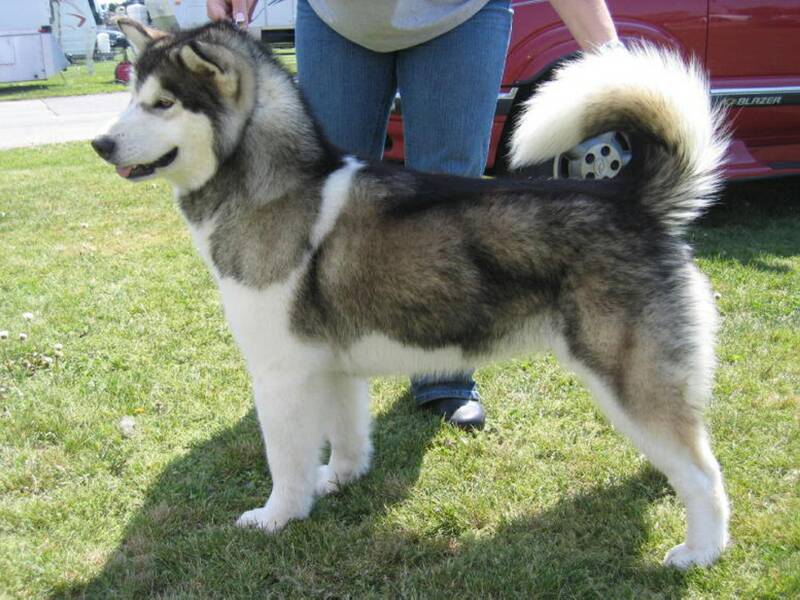
White collars, blazes, nape spots, split bars, eagle markings on the chest, and white legs are all caused by Irish Spotting
Irish Spotting is often easily overlooked. Frequently it produces nothing more than white feet (hidden by the white legs which are part of normal Malamute coloring) and perhaps a small white spot on the chest. The agouti on the left has a typical white streak running up her chest.
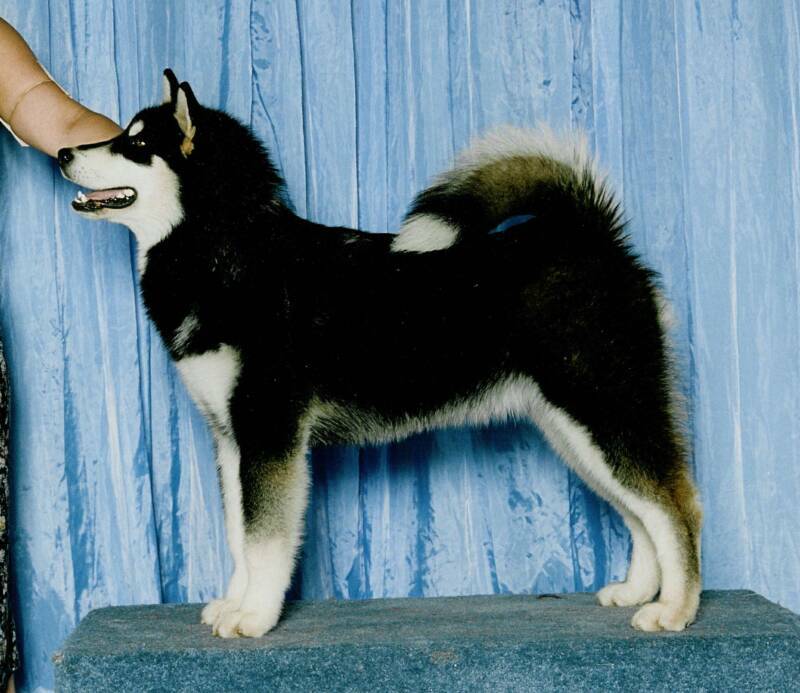
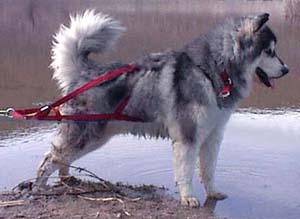
Closely compare the dog on the right to the solid colored Malamutes above. Note the color stops very high up on his front legs and does not drop below his hocks on the rear. Also, the bands of color on his chest are broken and most of his chest is white. This is due to Irish spotting.
Unauthorized copying of any part constitutes a breach of copyright law.
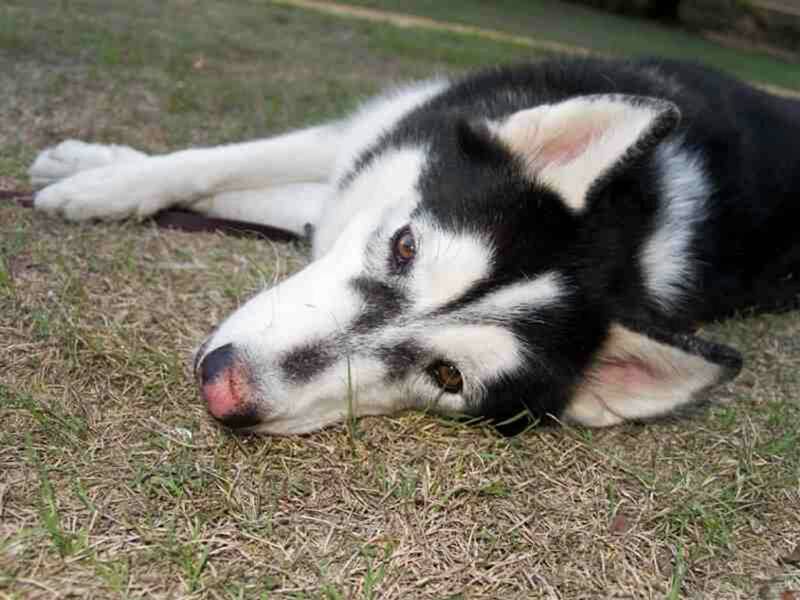
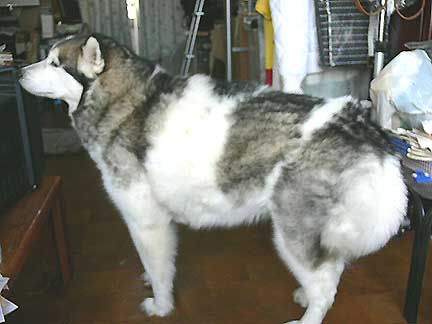
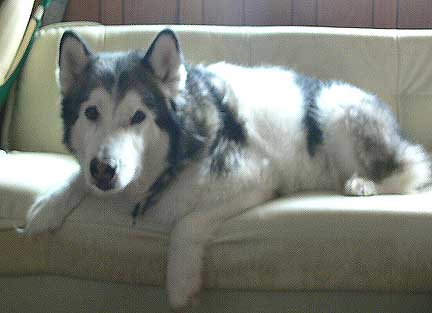
Mimi is a Piebald Malamute. Her Grandparents/Great Grandparents were AKC Champions in fact.
With all the alleles at the White Spotting locus, incomplete dominance is at play. Mimi is apparelty heterozygous for Irish (Si) and Piebald (Sp). When bred to a solid (SS) dog, luck dictated that Mimi did not pass along her Piebald gene to any of the pups. Thus none of her pups resembled her, and none had anything more than minor Irish white spotting.